
Transcript
Announcer:
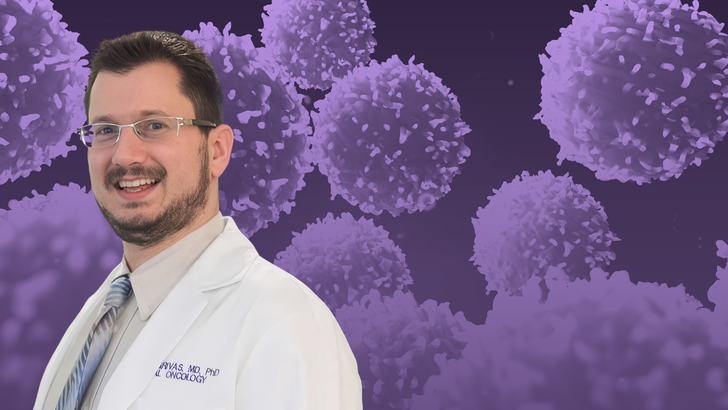
You’re listening to Project Oncology on ReachMD. On this episode, we’ll hear from Dr. Petros Grivas, who’s a board-certified medical oncologist and researcher at Fred Hutch Cancer Center. He’s also a Professor and the Medical Director of Local Regional Outreach and the International Program at the University of Washington. He’ll be discussing common toxicities in advanced urothelial carcinoma treatment. Here’s Dr. Grivas now.
Dr. Grivas:
It's a very important question, of how we monitor patients with advanced metastatic urothelial carcinoma for potential side effects of treatments.
So, with enfortumab vedotin, based on the published data, peripheral neuropathy, numbness, tingling, weakness, and pain are things we look at carefully and evaluate in the patients. Pain can happen commonly, and based on published data, is one of the most common—if not the most common—reason to either dose halt and/or dose reduce enfortumab vedotin.
So it's very important to have a baseline assessment of the patient, a very good education by the attending physician—often the advanced practice provider—nursing team, pharmacies, and the medical team, and close monitoring of the patients. Ask the patient and the caregiver to give a very timely and as-accurate-as-possible report of whatever side effects may happen and what changes the patient may experience over time.
Skin rash or other changes in the skin and itching can happen. Pruritus can happen, either because of enfortumab and/or pembrolizumab. So it's very important to keep that in mind.
And of course, other things may happen, like chemotherapy-like side effects—for example, low appetite or fatigue, low energy, or low stamina. Appetite can be reduced, taste may be changed, there are sometimes nausea or bowel movement changes, and hair loss. All of those things could happen in relation to enfortumab vedotin. Cytopenias are not that common with IV pembro, but it's something to keep in mind, and of course, watch the blood counts.
Of course, with the immunotherapy, we always take a very close look at potential immune-related adverse events, and we educate the patient—again, as I mentioned—very carefully to report in a timely manner as soon as possible any potential symptoms or changes.
And those educational and monitoring components are very important, because we may need to do dose adjustments—for example, hold the dose, potentially reduce the dose of enfortumab, or potentially hold off on the checkpoint inhibitor. All of those things, again, are critical, and they depend on the accuracy and depth of education. Also, communicate with the patient that more is not always better. We need to make sure we have a close eye on and assessment of the status of the patient and potential side effects. And dose adjustments may be needed, and those can be very helpful for tolerance and tolerability of treatment.
Announcer:
That was Dr. Petros Grivas talking about recognizing and managing treatment-related toxicities in urothelial carcinoma. To access this and other episodes in our series, visit Project Oncology on ReachMD.com, where you can Be Part of the Knowledge. Thanks for listening!

